



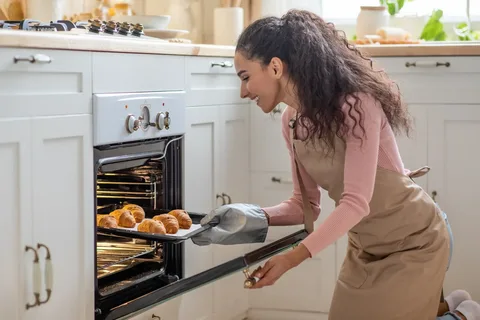
Every household has a centre of gravity, and for most Australian families it’s the kitchen. It’s where school lunches get organised, Sunday roasts are shared and late-night snacks are quietly enjoyed.
At the heart of that space sits one appliance we rarely think about until something goes wrong: the oven.
Choosing, installing and caring for your oven properly affects everything from the quality of your meals to the size of your power bill and the safety of your home. This guide covers what every household should know.
Why Your Oven Matters More Than You Think
It’s easy to see an oven as just a hot box, but it’s one of the hardest-working appliances in the home. Families use it for weeknight dinners, birthday cakes, reheating leftovers and holiday feasts.
When it works well, nobody notices. When it doesn’t, the whole household’s routine is disrupted.
Your oven also has a real effect on running costs. According to Sustainability Victoria, cooking makes up roughly 5% of the total energy bill in a typical Victorian household. That might sound modest, but over a decade of ownership those costs add up, especially in larger families who cook every day.
The Hidden Costs of an Inefficient Oven
An old or poorly fitted oven can leak heat through worn door seals, take longer to reach temperature and cook unevenly. That means more energy used, more burnt edges and undercooked centres, and more frustration at dinnertime.
Choosing the Right Oven for Your Household
Before you buy, it’s worth thinking about how your household actually cooks. A couple who mostly reheat meals has very different needs from a family of six who bake every weekend.
Fan-Forced vs Conventional
One of the most important decisions is the type of heating. The Victorian Government’s energy guidance explains that fan-forced ovens circulate hot air evenly, keeping the temperature steady and cooking food faster than conventional ovens. For most busy households, that combination of speed and consistency is hard to beat.
Energy Ratings and Size
Interestingly, cooking appliances don’t carry energy star ratings the way many other household appliances do, and generally the bigger the appliance and the longer it runs, the more your cooking will cost.
That makes it important to choose an oven sized to your real needs rather than the biggest model in the showroom. You can read more practical tips in Sustainability Victoria’s guide to reducing cooking appliance costs at home.
Steps to a Safe and Successful Oven Setup
Buying a new oven is only half the job. How it’s installed determines how safely and efficiently it will run for years to come. Here’s a simple process every household can follow:
- Measure your space carefully. Check the height, width and depth of the cavity, and allow for the ventilation clearances listed in the manufacturer’s manual. A built-in oven that’s squeezed into the wrong space can overheat surrounding cabinetry.
- Check your power supply. Many modern ovens need a dedicated circuit with a specific current rating. Older homes may need wiring upgrades before a new appliance can be connected safely.
- Confirm whether it’s hardwired or plug-in. Hardwired ovens must be connected by a licensed electrician. In Queensland, as across Australia, electrical work of this kind isn’t a DIY job.
- Book a qualified installer. For Gold Coast households, professional oven installation on the Gold Coast services make sure your appliance is connected to code, properly secured and tested before you use it.
- Test before the first big cook. Run the oven empty at a high temperature for 30 to 60 minutes to burn off any manufacturing residue, and check that the fan, light and thermostat all work as expected.
- Keep your paperwork. Store the manual, warranty and electrician’s compliance certificate together. You’ll need them if anything goes wrong or if you sell the home.
Everyday Habits That Make a Difference
Once your oven is in, small daily habits can extend its life and reduce your power bills.
Keep the Door Closed
Every time you open the oven door to check on dinner, a significant amount of heat escapes and the oven has to work harder to recover. Use the oven light and the glass window instead wherever possible.
Use Smaller Appliances When It Makes Sense
Not every meal needs the full oven. For small portions, a microwave, air fryer or electric frypan will often do the job faster and with less energy. Save the oven for roasts, bakes and batch cooking where it truly earns its keep.
Cook in Batches
If you’re turning the oven on, make the most of it. Roast vegetables alongside the main dish, or bake tomorrow’s lunch while tonight’s dinner cooks. Batch cooking is one of the easiest ways for busy households to save both time and money.
